Ahrefs vs Marvedo: Data research or your next SEO action?
Identify the evidence you need for backlink research, keyword selection, and website priorities. Compare Ahrefs’ research tools with Marvedo’s scope from research through publication.
Last checked:
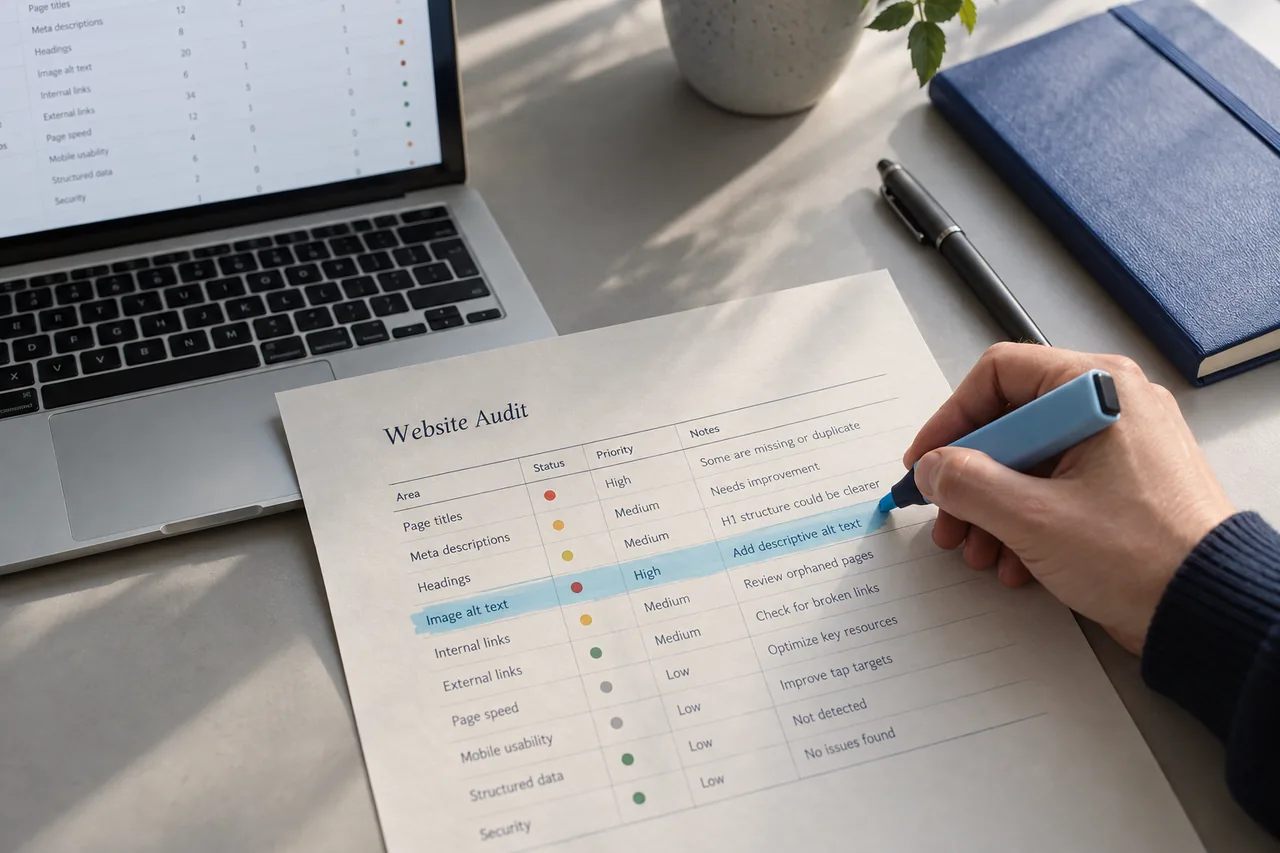
When comparing Ahrefs and Marvedo, the key distinction is where the data comes from and what you intend to do with it. Researching a competitor’s links differs from interpreting your own website’s search performance. Likewise, seeing estimated demand for a keyword does not mean you should immediately publish a page about it. A good tool decision preserves these distinctions and starts with your team’s actual question.
Ahrefs supports competitor research, keyword analysis and technical audits through Site Explorer, Keywords Explorer and Site Audit. Marvedo’s launch scope connects keyword, competitor, and backlink research with technical audits, an SEO assistant, content creation, and visibility tracking. Growth and Team scope also include a publishing calendar and CMS workflows. Access to Marvedo is through a free private-beta invitation. This guide examines the research depth and implementation workflow your work needs without equating database sizes.
Start with the data source and intended use.
The table summarizes stated capabilities. A listed feature alone does not prove that a product provides the depth your website needs. Use your own examples, especially for a small local market or narrow product category. Evaluate a research tool using a recurring difficult question rather than your easiest task. That produces evidence relevant to your decision beyond a general demonstration.
| Need | Ahrefs | Marvedo |
|---|---|---|
| External website and backlink research | Site Explorer is documented for this research | Backlink research; evaluate sources, coverage, and page context |
| Keyword research | Research tools are provided through Keywords Explorer | Keyword and competitor research, saved analyses, and an SEO assistant |
| Technical review | Site crawling is documented through Site Audit | Technical audits, finding prioritization, and task tracking |
| Access and payment | Depends on plan, usage allowance, and billing period | Free private beta; invitation required |
| Plan scope | Use the selected plan’s current terms | Starter / Growth / Team; proposed monthly prices of USD 29 / 79 / 199 |
Read website data, external estimates, and interpretation separately.
Two numbers shown side by side in an SEO report may answer different questions. A performance record for your own website is not the same measurement as an estimate for a competitor’s domain. First ask where each output comes from: a connected account, public web research, or another provider’s calculation. If the output obscures this distinction, combining the figures in one comparison table can mislead.
Interpretation is a third layer. A tool recommending a topic does not establish that the topic will bring customers. Consider the recommendation alongside your product, audience, content quality, and implementation capacity. Write the observation and your interpretation as separate sentences in the decision record. If the recommendation does not work out, you can then investigate whether the issue was data, an assumption, or incomplete implementation.
This habit is especially useful in management presentations. Present an uncertain estimate as an opportunity to test before using it to underpin a revenue target. State what additional evidence would change your decision. If the opportunity shrinks after irrelevant queries are removed, accept that change rather than preserving the original large total. Managing uncertainty honestly matters as much as accessing more rows.
Define the deliverable before evaluating backlink research.
Imagine a content team preparing an industry study. It wants to understand which publications link to similar research. The required output is more than a domain list: topic, link context, and the reason a publication might be interested also matter. Evaluate Ahrefs Site Explorer and Marvedo’s backlink research against this deliverable. Use the same industry examples to compare source freshness and usefulness; do not let the total number of records determine your choice.
Choose a small set of candidate pages and open them yourself. Does the link still exist, is the content current, and does its audience fit your research? Do not treat every candidate as equally useful based on a score alone. Consider topic, context, and genuine reader benefit. Keeping the list short makes it easier to verify each entry during evaluation.
Then document which work stays in the tool and which stays with the team. Preparing a relevant proposal for a publisher, checking data, and understanding the relationship are separate tasks. A generated list does not complete them. Evaluate the quality of reviewed, justified research opportunities rather than simply counting links. This also makes your purchasing questions more concrete.
Match keywords with answers your business can actually provide.
Suppose you lead content for a new B2B product. The team is comparing a popular broad term with a narrower question closely related to the product. Volume alone cannot set the priority. Consider the reader’s stage, the question the page will answer, and whether the product can help that reader. Write the page’s core message when selecting a keyword; difficulty explaining it may mean more research is needed.
You can evaluate Ahrefs Keywords Explorer for the data side of this research. In Marvedo, examine the process that carries keyword research into a content brief, editing, and a publishing calendar. Keep the target country, language, product group, and known competitors consistent in both evaluations. Otherwise, differences may come from the available data, selected filters, or your question. Have your own content team use the final output.
A useful trial result should also explain rejected options. If a topic is too far from your customers’ needs, record why you excluded it. A future team can then avoid repeating the same discussion. Record the target page, reader question, original information available, and missing evidence. Research value can then include avoiding unnecessary content, not just finding new keywords.
Use a different test for priorities on your own website.
After competitor research, the next question is often practical: which page will we work on next week? Your website’s actual conditions matter. One page may have outdated inventory information, another may leave a key question unanswered, and a third may have an access issue. Define these as separate tasks. If you cannot explain the benefit to the reader, reconsider the reason for the priority.
Ahrefs Site Audit is a documented option for technical crawling. Apply the same working discipline when evaluating Marvedo’s technical audit and saved-analysis approach: verify findings, identify affected URLs, assign an owner, and define the recheck. Marvedo’s beta access page prepares an email invitation request; it does not start a crawl or analysis. Once you have beta access, examine the same page and assess how easily your technical team can act on the tasks.
Define the acceptance criterion for the engineering task. Removing an alert from a report may not be enough; the page must retain its intended behavior. If the change affects a shared component, inspect samples from other pages too. This check remains part of implementation responsibility regardless of the research subscription.
Include research intensity in your plan decision.
Ahrefs’ official pricing page distinguishes projects, research allowances, and usage terms by plan. The September 22, 2026 review showed currency-dependent pricing. This article therefore does not give one starting price detached from your region and billing choice. Open the relevant current plan before purchasing and check the capacity you need. Estimate intensive research weeks separately from quieter weeks.
Marvedo’s private-beta access is free. Proposed monthly prices for Starter, Growth, and Team are USD 29, 79, and 199; these are not final commercial terms and do not initiate a purchase. When moving from one website to several, assess research, content, and crawl allowances alongside website and user counts. Use an intensive research week to estimate the appropriate plan, then check current terms before paid use.
When explaining the budget, describe which work you can plan better. Broad research capacity may have little value if you do not use it. Conversely, filling data gaps manually may add substantial work when client research is a recurring responsibility. Actual usage examples reveal this difference; a hypothetical maximum-usage scenario is not enough to decide.
Prepare an evidence record for your purchasing decision.
Do not end the evaluation with an impression from one session. Complete a research question from start to finish and have someone else use the result. A content lead could review the topic brief and an engineer the technical task. Record missing information. Whether someone who has never seen the tool can understand the task is a useful delivery-quality test for either product.
- Select one competitor research task; separate external data from connected-account information.
- Select one content decision; record the reader, existing page, and publishing rationale.
- Select one technical finding; open the URL and confirm that the issue remains.
- Record uncertainty; do not treat missing data as zero or definite absence.
- Assess the handoff; record what a second person still needs to investigate.
- Verify capacity; check that everyday work fits the selected terms.
Do not interpret an empty result as proof of no demand.
You may find limited results for a narrow product name or emerging topic. Record the limitation and rephrase the question. Customers may describe the need differently from your industry terminology. Sales questions, support requests, and product names on your website offer additional research starting points. They do not establish search volume; they help identify language worth investigating.
Compare how you work with the tools in this situation. How much effort does it take to try another query, reject irrelevant matches, and explain the remaining uncertainty? If evidence is still insufficient, deferring publication may be sensible. An evaluation need not always generate a content task. Recording uncertainty accurately and postponing unnecessary work can also be useful.
Evaluate Ahrefs and Marvedo against your work from research to implementation.
If you regularly research backlinks, inspect different domains, and interpret research data using your own expertise, there is a clear reason to evaluate Ahrefs. Base the purchase on examples from your market and the selected plan’s terms. This article does not promise identical coverage for every query or any particular performance outcome.
If you want to manage SEO research, content preparation, publishing, and visibility tracking in one process, consider Marvedo. With beta access, select a research question, turn the result into a content task, and carry it into publishing and measurement within the relevant plan scope. You can continue using other tools for specialist research. A useful comparison shows which evidence supports the decision and what work your team completes afterward.
This guide was prepared with AI assistance using official sources. Examples are not customer results and do not promise performance improvements.