SEO and GEO
Get found on Google and in AI answers.
SEO gets your site into Google’s results. GEO gets your brand named in answers from ChatGPT, Gemini, Perplexity and Google’s AI. They share the same foundations, but you measure them differently.
What is GEO?
Generative engine optimization (GEO) is the work of getting your brand and pages mentioned, and cited as sources, in AI-generated answers. When someone asks ChatGPT “Which laptops should my company buy?”, GEO is what puts your name and your site in the reply.
GEO doesn’t replace SEO; it builds on it. AI answers draw on pages that can be crawled, say things clearly and can be trusted. Google itself says the usual SEO best practices apply to AI Overviews and AI Mode, and that no special file or markup is required.
GEO vs SEO: the difference
The same page can show up in both places, but success has to be measured separately.
| Question | SEO | GEO |
|---|---|---|
| Where do you appear? | In Google’s search results, among the blue links. | Inside the answers from ChatGPT, Gemini, Perplexity and Google’s AI. |
| How is success measured? | Impressions, clicks and rankings. | Being mentioned in the answer and linked as a source. |
| Where does the data come from? | Search Console, Google’s own data. | Asking AI platforms a chosen set of questions on a regular schedule. |
| What should you keep in mind? | An impression isn’t a click, and a click isn’t a sale. | A mention isn’t a visit, and answers change over time. |
How Marvedo measures both
On Google
Daily impressions, clicks and rankings from Search Console. After a change, the agent compares the page with the rest of your site at 14 and 28 days.
In AI answers
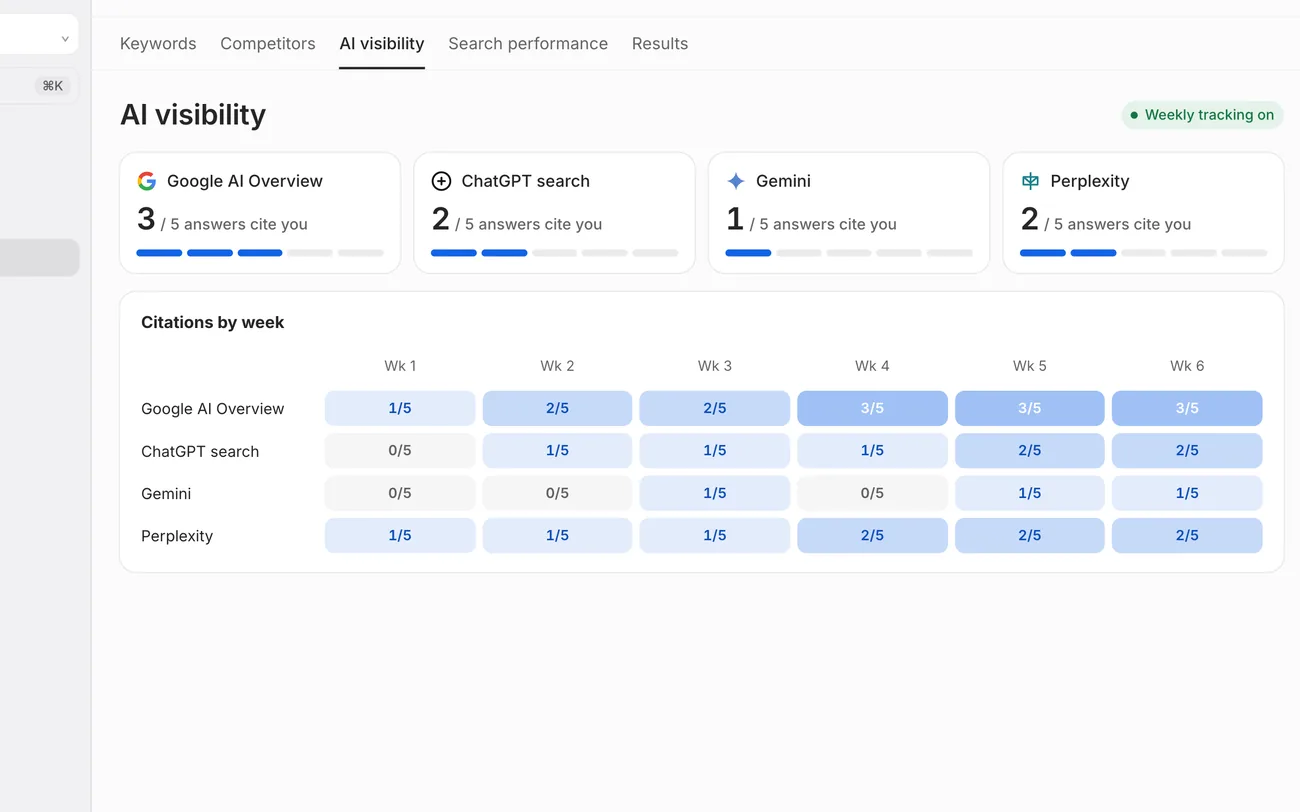
Every week, questions picked for your site are asked in Google AI Overviews, AI Mode, ChatGPT, Gemini and Perplexity, and Marvedo records how many answers cite you.
Against competitors
See which sites get cited instead of you, and which of their pages earn it.
Where to start with GEO
- 1
Stay crawlable
Make sure Google and AI crawlers can reach your pages, and that neither robots.txt nor your firewall turns them away.
- 2
Answer the question directly
Put the customer’s question in the heading and answer it in the first paragraph, with numbers, comparisons and your own experience.
- 3
Track who gets cited
Find the questions where competitors are cited, then strengthen your own page on that topic.
SEO and GEO questions
Is SEO dead?
No. AI answers lean heavily on clear, trustworthy pages that search engines can find. Good SEO is the foundation GEO is built on.
Do I need llms.txt or another special file for GEO?
Google says no special file is needed to appear in AI Overviews or AI Mode. What matters is that the page can be crawled and answers the question clearly.
Can anyone guarantee a spot in AI answers?
No. Answers vary from question to question and change over time. Marvedo makes no guarantees; it measures where you’re cited and what changed, every week.
How can I tell if AI answers mention my site?
Run the free AI visibility scan. Without signing up, you’ll see whether Google AI Overviews and ChatGPT cite you for a few questions relevant to your site.
Keep exploring
See AI visibility in the app
Weekly tracking, five AI surfaces and the competitors cited in your place.
Guide: where to start with SEO and GEO
A guide to starting with one page and measuring Google and AI answers separately.